


In May 2024, I received an urgent email from a 30-year-old woman from India. She was desperate to schedule a free consultation as soon as possible. Her message was emotional and hurried—clearly, something was wrong. I soon learned that she was a close friend of one of my former clients, another Indian national I had successfully helped secure a K-1 fiancé visa.
During our consultation, her story quickly unfolded. She had been granted conditional permanent residency in the U.S. after marrying a fellow Indian man who holds U.S. citizenship status. Her green card had expired in March 2023, but she and her then-husband had filed a joint Form I-751 to remove the conditions on her residency back in January 2023—without legal representation.
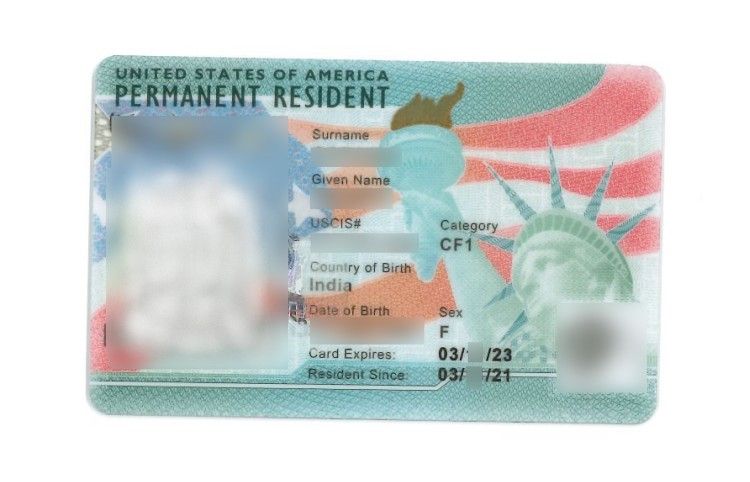
The woman’s conditional residency expired in March 2023 because her marriage was less than two years old at the time her marriage-based green card was approved.
Unfortunately, while their I-751 petition was still pending with USCIS, their marriage began to fall apart. Eventually, the relationship ended in divorce, leaving her in a vulnerable and uncertain immigration position. 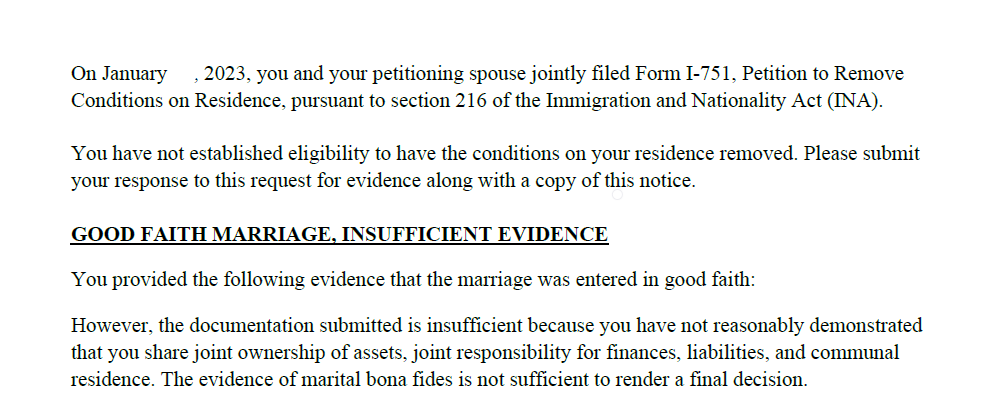
When I asked what evidence had been submitted with her initial Form I-751 application, she couldn’t tell me. Her ex-husband had filed the petition on his own and never shared a copy with her.
Mistake #1: Not keeping a copy of your application filed with USCIS
Since I couldn’t assess what evidence had been included in her I-751 petition, I submitted a FOIA request to obtain a copy. I filed the request online in September 2024, and USCIS responded with a partial file—about 600 pages—in October 2024. This suggests that you can generally expect a FOIA response within approximately one month.

After carefully reviewing the documentation provided, I concluded that the evidence was not strong enough to support a successful I-751 petition following a divorce.
Mistake #2: Failing to document your marriage from the beginning of the relationship
While her I-751 petition was still pending, she finalized her divorce from her U.S. citizen spouse. I advised her to take the following steps:
- Submit a written request to amend the joint Form I-751 petition to a waiver-based petition (see the sample template we used below). A final divorce judgment (decree) must be submitted with it.
- Provide new evidence of the bona fide nature of the marriage.
Request to Amend Joint Form I-751 Template
[Conditional resident’s full name]
[Conditional resident’s full address]
June 30, 2025
U.S. Citizenship and Immigration Services (USCIS)
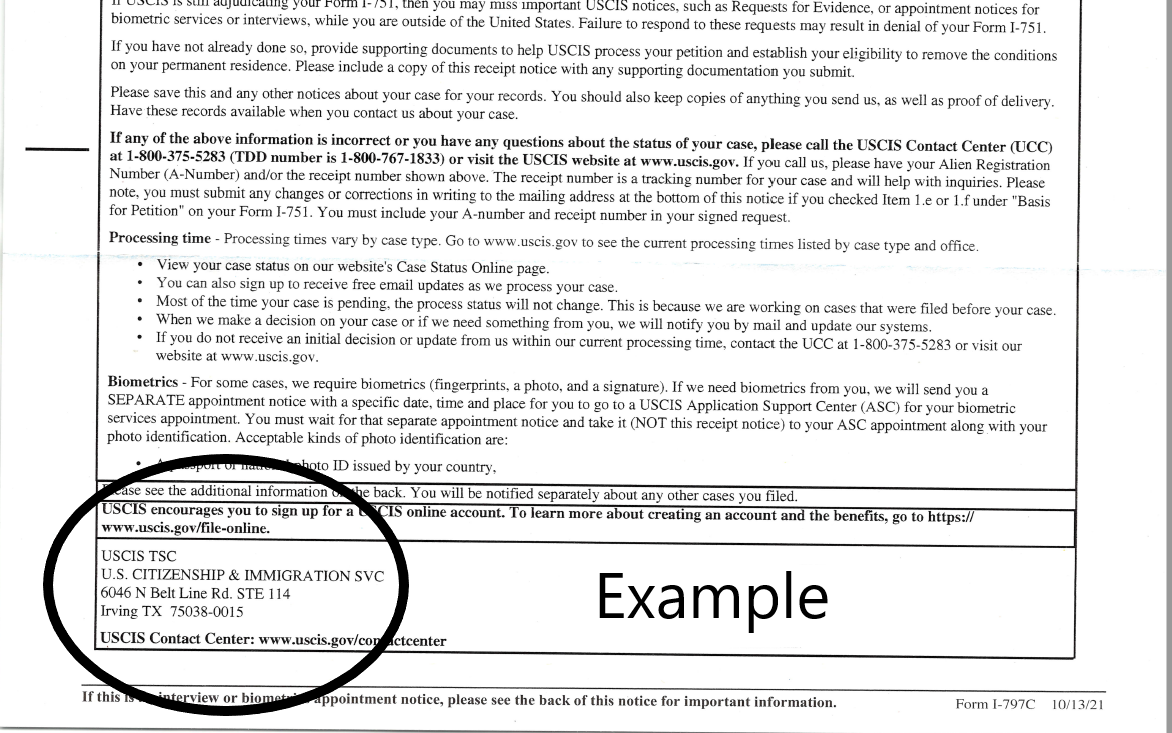
[Your Form I-751 service center address.] You can find it in the lower left-hand corner of your Form I-751 receipt notice:
Subject: Request to Amend Joint Form I-751, Petition to Remove Conditions on Residence
Receipt number: [Enter your Form I-751 receipt number]
Conditional Resident: [Conditional resident’s full name] ([conditional resident’s A-number]
Dear Sir/Madam,
I am writing to request an amendment to the joint Form I-751 petition filed on mm/dd/yyyy (USCIS receipt number XXXXXXXXX). Due to the termination of the qualifying marriage, I respectfully request that USCIS amend the petition to indicate that I am applying for a waiver of the joint filing requirement based on the following ground:
My marriage was entered in good faith, but the marriage was terminated through divorce or annulment.
Please find enclosed supporting documentation containing the final divorce decree and evidence of good faith marriage.
Thank you for your time and attention to this matter.
Sincerely,
________________
[Conditional resident’s full name]
Ph.: 123-456-789
Email: [email protected]
Enclosures:
- Final divorce decree.
- Evidence of a good faith marriage.
- Copy of the conditional resident card (front and back)—only if it was not submitted with the initial application
Evidence
I advised the client to collect the following evidence to demonstrate the bona fide nature of her marriage:
- Sworn affidavit by the conditional resident detailing the development of the relationship with the U.S. citizen spouse and the circumstances leading to the divorce.
Note: This affidavit must be signed by the conditional resident and notarized. - Screenshots of WhatsApp conversations between the spouses—we submitted 300 pages of screenshots
- Emails from the landlord confirming their jointly rented apartment
- Joint lease agreements covering the entire duration of the marriage
- Driver’s license of the wife showing the jointly shared residential address
- Social Security card issued to the wife and mailed to the shared address
- U.S. military spouse ID (front and back)
- Social Security Administration letter mailed to the shared residence
- Joint renter’s insurance policy
- Jointly filed federal tax returns
- Joint checking account statements covering the entire marriage—not just one or two months
Note: Merely having a joint bank account is not enough. Each spouse should deposit their income into the account and use it to cover shared expenses, such as rent, utilities, insurance, gas, groceries, and other monthly household costs. USCIS will not only confirm that the account exists but will also closely examine the nature and consistency of transactions.
- Joint car insurance listing both spouses as insured parties
- Joint car registration
- In addition, we included the ex-husband’s medical records, as one of the contributing factors to the divorce was his physical disability. The ex-wife supported this claim with medical test results and documentation of her efforts to assist in his treatment and recovery.
- Annotated wedding photographs each photo included detailed captions specifying the location, occasion, individuals depicted, and the date. Note: Do not submit photographs without detailed descriptions.
- Receipts for wedding ceremony expenses — including catering, hall rental, gifts, jewelry, and photography services.
- Wedding ceremony invitations.
- Joint travel documentation — such as airline tickets, hotel bookings, and Airbnb reservations.
- Three detailed and notarized affidavits from family members and friends with personal knowledge of the couple’s relationship.
- Court marriage photographs — annotated with descriptions.
- Personal photographs of the couple from the early stages of their marriage — annotated and compiled into more than 60 pages.
- Joint social media posts — 20 pages of shared posts from Facebook and Instagram.
- Joint phone bills — covering the entire period from when a joint account was opened until the divorce.
- Call history — 20 pages of call logs exchanged between the couple.
- Employment records listing the ex-husband as the client’s emergency contact.
- Email exchanges between the couple and their friends — including wedding-related communication.
- Amazon order confirmations delivered to the joint address.
Outcome
In total, we submitted 700 pages of supporting evidence with the I-751 waiver application. The waiver request and all new evidence were submitted in November 2024, and by December 2024, USCIS approved the petition without an interview. Our client received her 10-year green card by mail in December 2024.

Recommendations for Conditional Residents Facing Marital Problems with Their Spouses
If you are a conditional resident experiencing difficulties in your relationship with your sponsoring spouse, here are my key recommendations:
- Document Your Relationship Thoroughly
Maintain detailed records of your relationship. Collect as much supporting documentation as possible. The more evidence you can present, the stronger your case will be when filing to remove conditions without your spouse. - Keep Copies of All USCIS Filings
Retain copies of every immigration application and supporting document you submit to USCIS. These records may be critical later in your case. - Monitor Your I-751 Filing Deadline Carefully
Form I-751 must be signed and submitted during the 90-day period immediately before your conditional green card expires. Late filings may lead to a denial and could result in removal proceedings. - Use the Most Recent Edition of Form I-751
Always use the latest version of Form I-751. Submitting an outdated form will result in automatic rejection. Filing late can also lead to denial and make you subject to deportation. - Understand Your Options
You cannot remove conditions through a different U.S. citizen spouse or switch to another immigration category (e.g., employment-based). If your marriage ends in divorce, your only option is to file a waiver of the joint filing requirement. - Keep Your Mailing Address Updated with USCIS
If you move, notify USCIS immediately. If USCIS sends you a Request for Evidence (RFE) or an interview notice and you fail to respond or attend, your application may be denied, and you could be placed in removal proceedings.
About Author:
Asel Williams, Esq. is the founding attorney behind Williams Law, a New York-based immigration firm she launched in 2018 (building on her Columbia Law School, Class of 2017) . Admitted to the NY Bar, she has since focused her practice exclusively on U.S. immigration law, representing clients nationwide with empathy, expertise, and a strong client-first ethos.
Under her leadership, Williams Law has earned outstanding reviews — clients often praise her responsiveness, clarity in communication, and meticulous handling of green card and permanent residency applications. She has authored over 300 online articles on immigration legal issues, demonstrating her dedication to public education as well as advocacy.
Based in New York City, Asel has built a trusting reputation (“a true blessing” and “best immigration lawyer in NYC”) across reviews and ratings. She combines top-tier legal training, deep subject-matter expertise, and a compassionate approach to guide clients through complex immigration processes with confidence.